
From Chacao to the Andes
Coffee arrived in Venezuela in the eighteenth century. The Jesuit missionary José Gumilla is credited with bringing the first plants, around 1732, to the missions of the Orinoco basin. Commercial cultivation began in 1784 in the valley of Chacao, east of Caracas, where priests and landowners including José Antonio Mohedano, Pedro Palacios y Sojo and Bartolomé Blandín planted the first coffee estates.
From the Caracas valley coffee moved west into the Andes. In Táchira, Gervasio Rubio planted coffee on his estate in 1794 — the town of Rubio carries his name — and coffee reached Trujillo in 1801. After independence, coffee replaced cacao as Venezuela's main export.
The Maracaibo coffee trade
The Andean states of Táchira, Mérida and Trujillo had fertile slopes but no direct route to the Caribbean. Their coffee — together with coffee from Cúcuta, across the Colombian border — was carried by mule, river boat and later railway down to the ports of Lake Maracaibo, then shipped through the port of Maracaibo to New York, Hamburg and Le Havre.
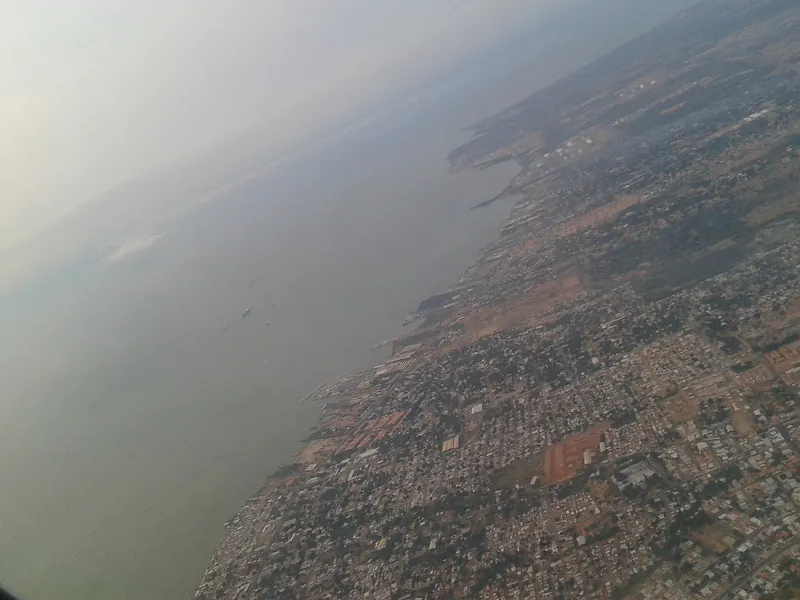
In international markets these coffees became known simply as "Maracaibos", graded and sold under sub-names: Táchira, Mérida, Trujillo and Cúcuta. From the 1840s German merchant houses based in Maracaibo came to dominate the trade, opening branches in Andean towns such as Rubio and San Cristóbal, financing farmers and selling them pulpers, hullers and supplies. By the 1870s Táchira was Venezuela's leading coffee region.
Golden age and decline
Through the nineteenth century Venezuela ranked among the world's largest coffee exporters. Exports peaked around 1919, at roughly 82,000 tonnes, when only Brazil shipped more. Coffee financed roads and railways and shaped the culture of the Andes.
Oil changed everything. By 1928 petroleum made up about three quarters of Venezuela's exports and coffee less than a fifth. The government created the Instituto Nacional del Café in 1936, but production and exports declined through the twentieth century, and for years most Venezuelan coffee was consumed at home.
Venezuelan coffee today
Coffee is still grown by tens of thousands of small farming families, mainly in Portuguesa, Lara, Trujillo, Mérida, Táchira, Monagas and Sucre. New Venezuelan-bred varieties such as Monteclaro, the recognition of the Caripe variety and a new generation of producers and exporters are bringing Venezuelan coffee back to international buyers. See our guide to the origins.
Harvest calendar
Venezuela has one main harvest a year. Timing varies with altitude and region; the table shows typical windows.
Harvest Peak Shipments
Venezuelan coffee varieties
Commercial lots are field blends of several cultivars. These are the varieties found on Venezuelan farms, starting with the four bred or discovered in Venezuela.
| Variety | Origin / lineage | Notes |
|---|---|---|
| Monteclaro (Monte Claro) | INIA selection, Táchira; registered 2013 | Venezuelan-bred, rust-tolerant; strong cupping results; widely planted in the Andes. |
| Araguaney | INIA selection; released alongside Monteclaro | Venezuelan-bred; named after the national tree. |
| INIA 01 | INIA, registered 2001 | Earlier Venezuelan-bred line. |
| Caripe | Natural Typica × Bourbon cross, identified 1956 in Caripe, Monagas | First Venezuelan variety in the World Coffee Research catalogue (2023). |
| Typica ("Criollo") | Original Arabica line | The historic base of old Venezuelan farms; tall, shade-loving. |
| Bourbon | Bourbon line | Traditional in the Andes and Lara; sweet cup. |
| Caturra | Natural Bourbon mutation | Compact, productive; common in Mérida. |
| Catuaí (red and yellow) | Mundo Novo × Caturra | Widespread, productive, compact. |
| Mundo Novo | Typica × Bourbon (Brazil) | Older, tall plantings. |
| Villanueva | Local selection, Mérida | Found in the high zones of Mérida. |
| Castillo | Colombian rust-resistant line (Cenicafé) | Common in Portuguesa and Táchira. |
| Colombia 27 | Colombian rust-resistant line | Widely planted across Venezuelan farms. |
| Catimor / Sarchimor | Timor Hybrid crosses | Productive, rust-resistant; used in INIA trials. |
| Robusta (C. canephora) | Second coffee species | Grown in lowland farms; small lots. |
Processing and grades
Most export-quality Venezuelan Arabica is washed: hand-picked, pulped, fermented 16–20 hours, washed and dried on patios or raised marquesinas to 12% moisture or less. Historically the top washed grade was called Lavado Fino. EMMEVI offers three grades: Grade A (washed, high-grown), Grade B (washed, standard) and Grade C (natural, commercial), each lot with its own quality certificate. Venezuelan prices at origin are quoted per quintal of 46 kg, which is also our standard export bag.
Questions
Why is Venezuelan coffee called "Maracaibo" coffee?
Because for most of the nineteenth and early twentieth centuries, coffee from the Andean states of Táchira, Mérida and Trujillo was carried down to Lake Maracaibo and exported through the port of Maracaibo. Traders sold it as "Maracaibo" coffee, with sub-names such as Táchira, Mérida, Trujillo and Cúcuta.
When is the coffee harvest in Venezuela?
The main harvest runs from about October to March in the Andes and the piedmont, with the peak from November to January. The east (Monagas and Sucre) starts earlier, around September. New-crop shipments usually leave from January.
Which coffee varieties are Venezuelan?
Monteclaro, Araguaney and INIA 01 were bred by Venezuela's National Institute for Agricultural Research (INIA). Caripe is a natural hybrid identified in Monagas in 1956 and is the first Venezuelan variety in the World Coffee Research catalogue.
Was Venezuela a major coffee exporter?
Yes. Coffee replaced cacao as Venezuela's main export in the nineteenth century, and Venezuela was among the world's largest exporters. Exports peaked around 1919, when only Brazil exported more. Oil overtook coffee from the late 1920s.